


The HeroGuide Brand Story Method: 8 Steps to Clarify Your Message
Make your customer the hero and your brand the guide. Here are the eight HeroGuide steps, a worked example and a free AI tool to write your brand story.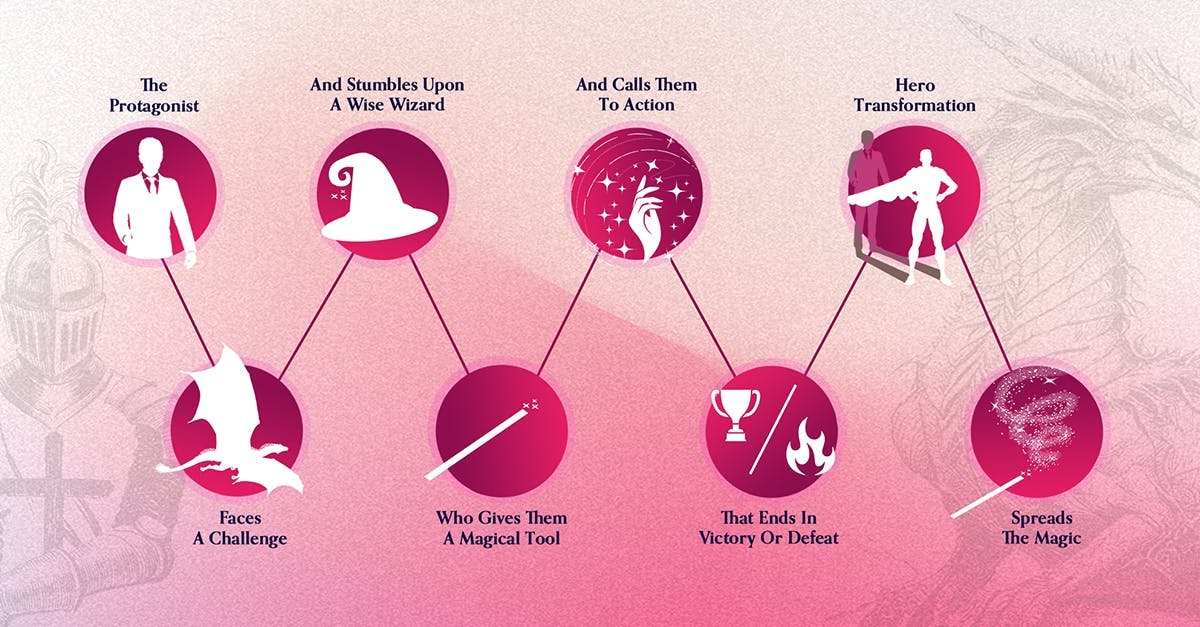
Here’s some tough love from our marketing team: your product is a dime a dozen.
Before you close this tab in protest, hear us out. We’re not saying your product isn’t special. We’re saying that if your marketing is all about you, customers will tune out.

The brands that win make the customer the star of the story. That’s exactly what the HeroGuide Brand Story Method helps you do. In this guide, you’ll get all eight steps, the questions to answer at each one, a worked example, and a free AI tool that writes your brand story for you.
What Is the HeroGuide Brand Story Method? (The Short Answer)
The HeroGuide Brand Story Method is an eight-step storytelling framework that casts your customer as the hero and your brand as the guide who helps them win. It clarifies your message, so every website, ad and email speaks to what your customer actually wants.
- The protagonist: your customer and what they want
- Faces a challenge: the “dragon” standing in their way
- Stumbles upon a wise wizard: your brand, the guide
- Who gives them a magical tool: your product or service
- And calls them to action: the clear next step
- That ends in victory or defeat: what’s at stake
- Hero transformation: who your customer becomes
- Spreads the magic: your customer tells others
Why Your Customer Must Be the Hero (Not Your Brand)
Humans have connected through stories since the dawn of time. A good story grabs attention, builds trust and turns a casual shopper into a loyal fan.

But here’s the catch: every customer already sees themselves as the hero of their own story. If your brand plays the hero, you’re competing with them for the spotlight. Play the guide instead (think the wise mentor who hands the hero what they need to win), and you become the brand they can’t do without.
HeroGuide builds on the classic hero’s journey, the story structure behind countless myths, novels and films, and turns it into eight practical steps for your marketing.
" Cast your customer as the hero and your brand as the guide. "
The 8 Steps, Explained (With an Example)
To make this concrete, we’ll walk a small, hand-poured candle company through every step. Grab your team and answer the questions for your own brand as you go.
1. The protagonist: what do they want?
What does your customer want that relates to your product or service? Keep it to one clear desire.
Candle example: “A calm, cozy home to unwind in after a long day.”
2. Faces a challenge: the dragon
What’s the root of your customer’s problem? Name it on two levels:
- External: the practical problem standing in their way
- Internal: how that problem makes them feel

Candle example: Externally, cheap candles smell like chemicals and give them headaches. Internally, they feel like they can never truly switch off.
3. Stumbles upon a wise wizard: your brand
Guides earn trust in two ways:
- Empathy: a short statement that shows you understand their struggle
- Authority: proof that you can slay this dragon, like reviews, results or credentials

Candle example: “We know how hard it is to relax when home doesn’t feel like a retreat.” Plus hand-poured soy candles and hundreds of five-star reviews.
4. Who gives them a magical tool: your product
- Process: three or four simple steps from first contact to happy customer
- Agreement: promises that remove the fear of buying, like a guarantee or free returns

Candle example: Pick your scent, light it when you get home, breathe. Don’t love it? Free returns.
5. And calls them to action
- Direct call to action: the main thing you want them to do, like “Buy now” or “Book a call”
- Transitional call to action: a lower-commitment step for people who aren’t ready yet, like a free guide or quiz
Candle example: Direct: “Shop the Calm Collection.” Transitional: “Take the 30-second scent quiz.”
6. That ends in victory or defeat
- Victory: the positive changes your customer will experience
- Defeat: what they risk losing if they do nothing

Candle example: Victory is evenings that feel like a mini spa. Defeat is another stressful night in a home that doesn’t feel like home.
7. Hero transformation
Who was your customer before your product, and who do they become after? This is their aspirational identity.

Candle example: From frazzled and always “on” to calm, in control, and the friend whose home everyone loves.
8. Spreads the magic
How will happy customers become advocates and bring you new ones? Think reviews, referrals, gifts and social shares.

Candle example: Customers gift candles to friends and post their evening wind-down ritual.
" The clearer your story, the easier it is for customers to say yes. "
Where to Use Your Brand Story
Once your story is clear, use it everywhere your customers meet you:
- Your homepage: lead with what your customer wants, not who you are. Here’s how to build the ultimate homepage using HeroGuide.
- Ads and social media: open with the dragon, close with victory.
- Emails and sales pitches: show empathy first, then authority.
- SEO content: pair the story with the words people actually search for. See SEO copywriting vs. storytelling.
- Brand visuals: colors and imagery should match the story you’re telling. Our color psychology guide can help.
Generate Your Brand Story in Minutes With HeroGuide.ai
Not a natural storyteller? No problem. We built HeroGuide.ai, a free AI tool that writes your HeroGuide brand story for you.
- Brainstorm with your team: more minds make it easier to define your brand and your audience.
- Describe your business: go to HeroGuide.ai and write up to 2,000 characters about your business, the problem it solves and who your customers are. The more detail, the better the result.
- Click “Generate Brand Story”: HeroGuide drafts your answers to all eight steps.
- Refine it together: edit the draft until it sounds like you, then share it with your team.
Can ChatGPT write your brand story?
We put it to the test. When we asked ChatGPT to create an eight-step HeroGuide brand story for a sample business, it came back with a generic, jumbled brand breakdown instead of a clear story. That’s why we built HeroGuide.ai to walk through all eight steps for you.
Either way, AI is a starting point, not a replacement. No tool knows your customers like you do, so use the draft to spark ideas, then make it yours.
How We Do It at WLI

Since 2017, we’ve helped clients clarify their message by making their customer the hero. Every messaging project starts with a brand story, then moves on to an SEO audit, copywriting and ongoing optimization.
The result is a website and marketing that speak to what customers want, instead of listing everything a business does.
Want us to clarify your message for you? See our HeroGuide messaging and SEO copywriting service.
HeroGuide Brand Story FAQ
An eight-step storytelling framework that casts your customer as the hero and your brand as the guide, so your marketing focuses on what your customer wants and how you help them get it.
Want a Message Customers Actually Listen To?
We’ll build your brand story, then turn it into website copy and content that ranks and converts.